Lead with love
Say "love" in a business meeting and watch people squirm. Too soft. Too much. Keep it professional. That flinch is exactly why most teams are mediocre.
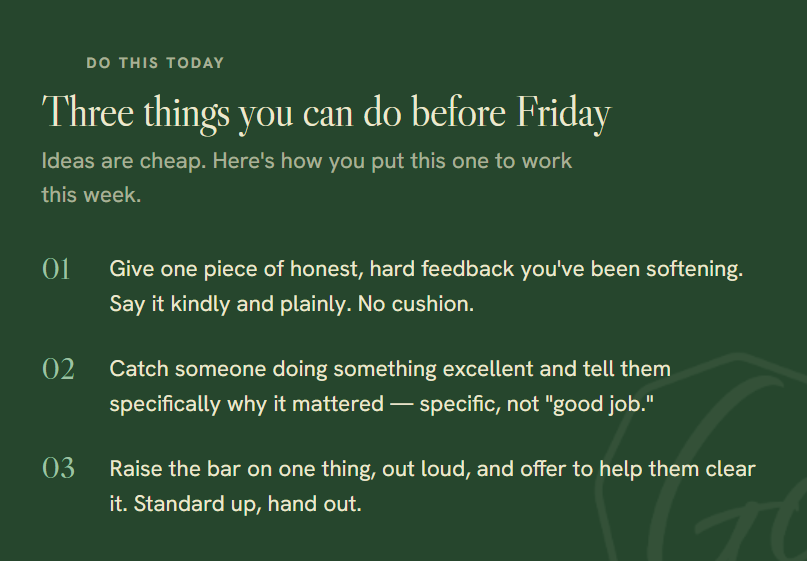
Let's be clear about what love is not. It's not being nice. Nice is cheap. Nice tells people what they want to hear and lets them stay small. Nice is a coward in a friendly mask. Real love wants you to grow, and growth hurts. The father who loves his kid teaches him to ride the bike, which means letting him fall. Love is high standards and a hand on your back at the same time.
I had a boss tell me my work wasn't good enough, to my face, no cushion. It stung. It was also the most respect anyone had shown me, because he believed I could do better and refused to pretend otherwise. Nice would've smiled and let me coast.
I saw the other side of that coin early in my career, when I got handed a leadership role over a team that included a guy who'd done my job before me, longer in the industry, sharper on the systems than I'd ever be. First real conversation we had, he gave me a dismissive answer and walked out of the room. I took it home angry. Slept on it angrier. Then I did the thing that actually mattered: I decide for the first time I wanted to be someone who leads with love. I looked at it from his side. Years in, never consulted, watched a young, inexperienced, stranger get put above him. I also needed him. So gave him full ownership of what he was good at, asked him questions instead of handing him answers, and when his work missed the mark, I said so, same day, no letting it slide. Took months. But he started bringing me what I needed instead of sitting on it, and told me later I was the best manager he'd worked for. That's not a coincidence. That's the same trade, both directions, tell the truth, and people either rise to it or show you they were never going to.
Here's the stat that should bother you. Only 23 percent of employees worldwide are engaged at work, according to Gallup's State of the Global Workplace report, which found 23% of employees worldwide are engaged at work, a record high. Read that again. Record high. Three out of four people on your team have quietly checked out, and that was the best year on record. That's not an employee problem. That's a leadership problem.
If your people aren't getting bigger than the job you gave them, you're not leading. You're managing decline.
Most leaders get this backward. They're soft on standards and hard on people, vague about what's expected, then frustrated when it's not met. Flip it. Demand the best work. Defend the person doing it. Google ran its own version of this test, a multi-year study of 180 teams called Project Aristotle, and found the single strongest predictor of high performance wasn't talent or experience. It was whether people felt safe enough to speak up, take risks, and admit mistakes, with psychological safety emerging as the strongest predictor of team performance, more important than talent, experience, or team composition. That kind of safety doesn't come from being nice. It comes from real ownership and someone willing to tell you the truth.
That's the kind of love that builds people who outgrow you. And that should be the goal. Care enough to tell the truth.